

Reality Bites
"The Narrative" is making America dumber

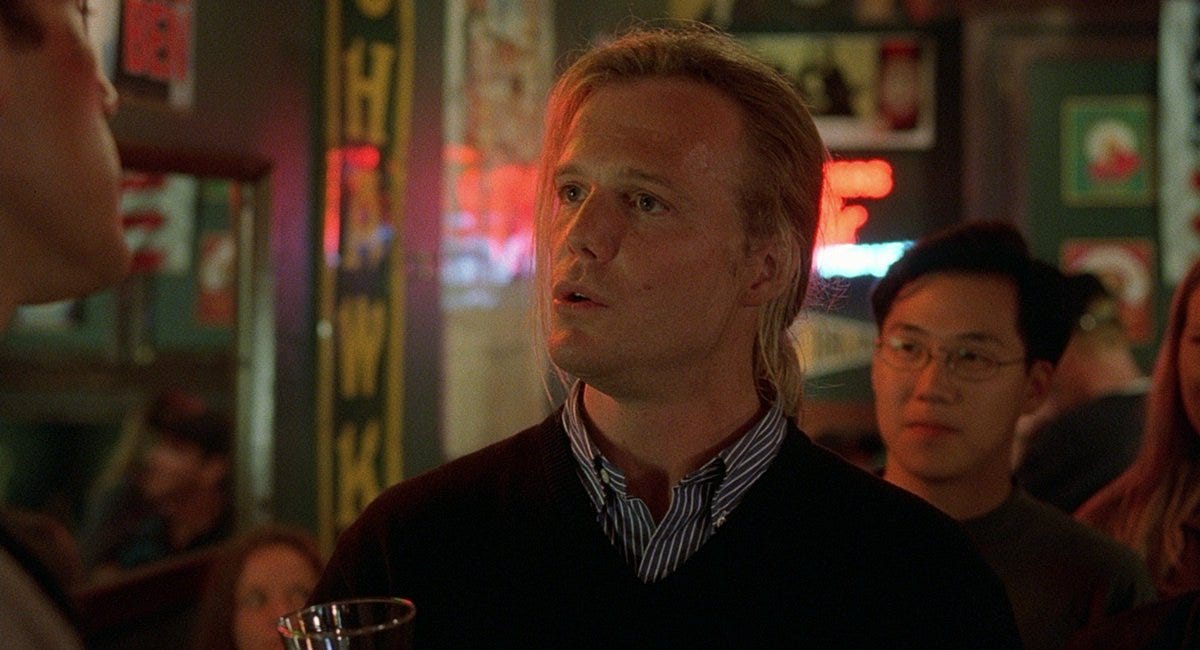
At some point in the last decade or so, a phrase slipped into everyday conversation—and began ending it.
You’ve heard it. You’ve probably said it. I certainly have.
“Oh yeah? That’s just the narrative.”
It sounds worldly. It carries the faint perfume of sophistication. It signals that the speaker is too savvy to be fooled by whatever story is being told.
And just like that, the conversation stops.
No evidence is offered. No counterargument is made. No curiosity is required. The person who invokes “the narrative” has declared themselves immune to persuasion. They are not engaging with what was said or posted—they are simply dismissing it as mere manipulation.
“Oh, yeah? That’s just the narrative, man.”
So, please, it’s time for us all to admit it: “The narrative” is dumb.
Not your narrative or mine. Not anyone’s in particular. The whole idea is making America dumber. It’s destroying even the possibility of democratic conversation and locking us into narrow acres of thought, where we are often kept ignorant of others’ insights, where our minds grow fat and lazy, and where we are unwittingly fed and tended to and corralled by Russian bots, Musk’s and Zuckerberg’s algorithms, and engagement-farming incels.
We have to break free of “the narrative.” It’s become a crutch and a cudgel. We’re better than this concept, and we must be braver than the retreat from discourse it represents.
Now, I’ll admit something up front: the insight behind this habit did not come from nowhere. It is not entirely foolish.
Of course the media frames stories. Of course political actors try to shape public understanding. Of course powerful institutions influence what gets attention and what does not. Skepticism is a necessary tool in a democratic society.
But somewhere along the line, a useful tool became a lazy reflex. Instead of asking whether a claim is true, we now often ask only who benefits from believing it. Instead of engaging in an argument, we simply declare what someone else is trying to say to us “the narrative” and move on.
So what might have begun as healthy skepticism curdles into a kind of conversational nihilism. If everything is “just a narrative,” then nothing needs to be examined. Facts are just tactics or messaging, and disagreement itself can be treated as proof of corruption or duplicity.
And once you arrive in that place—a place that feels so superior—something essential to our shared civic life starts quietly disappearing.
Conversation.
Conversation is the greatest capacity ever developed by the human species, the differentiator of our species from the rest. And it depends on a shared assumption: that there is a reality outside our heads, not just a blizzard of incommensurate “narratives” by which we separately map our way in the world, independent and free from needing to engage with anyone else’s claimed “narrative.”
But in fact there is a reality we are all struggling to understand. That reality isn’t simple or straight. It’s not easily understood. We don’t even perceive it correctly most of the time, our scientists tell us. But it is there.
Reality pushes back. It surprises us. Occasionally, reality bites.
There’s an old story—apocryphal, I’m sure, but I love it so much I’m not giving it up—about Dr. Samuel Johnson, the great 18th Century English writer, critic and lexicographer. Johnson was supposedly arguing with a French philosopher who was maintaining that, since all of our thoughts are within our minds, and since sometimes our minds deceive us in dreams and fantasies and paranoias, the existence of the physical world could not actually be proven to be true. The good Dr. Johnson kicked the Frenchman in the shin, declaring, “Thus, sir, I refute you.”
The point was not that philosophy is useless. The point was that some truths are established by friction with the world itself.
You don’t have to agree with someone’s interpretation of events. You don’t have to accept their conclusions. You certainly don’t have to buy into their “narrative.” But you do have to recognize that the person you are arguing with is contending with the same reality you are, at least in part. And you might learn something, extend your own understanding, by listening. But if the only move you are willing to make is to sneer and say, “That’s just the narrative you’ve bought into,” then you are opting out of conversation, and thus out of thinking.
This is not a problem confined to one political faction. It is not a pathology of the left or the right. It is an ambient habit of mind, reinforced daily by a media environment that rewards speed, certainty, and performative knowingness.
Democracy requires that we enter conversations with the humility that there is a world beyond our preferences—and that we might be mistaken about it. It requires that we risk being persuaded.
This may sound painfully, annoyingly naïve. In fact, it is far more pragmatic and tougher than cynicism. Cynicism is easy. It flatters our own minds, requires no evidence, makes no demands. Conversation—civic discourse and debate—that is work.
If you want to disagree with me—good. Show me something I’ve missed. Offer a fact, an argument, an experience that challenges what I think I know. For me, that’s always the good stuff in a conversation, when I’m caught up short by something I didn’t know or by a fresh way of looking at things. Just as engineers can get excited when they’re conducting a test and discover a flaw, I like being shown how I might be wrong. It means I’ve got more work to do. And work is good.
If we lose that sense of possibility in conversation with those who disagree with us—if we convince ourselves that everything they say is merely spin and nothing is simply true—then we will not “win.” We will simply become incapable of governing ourselves.
And that would be slipping into a habit of mind far more dangerous and illusory than any “narrative” ever devised.
—Terry
Loved this, Terry. So hard to do right now, but that's what makes it worth doing.
This article points out a number of important things and is worth saving to reread from time to time. The skills of listening and thinking have diminished, replacing depth with shallowness. Conversation requires two-way considerate communication and respect for thought beyond one’s own. I’ll stop here and finally comment that you continue to increase my vocabulary!