

The Weekly Watchlist
The Roberts Court takes aim at independent agencies; the Fed v Trump; the end of the transatlantic alliance; "Knives Out" is back

The holiday season is in full swing, but there’s little cheer to be found for anyone concerned about the immense concentration of powers in the hands of President Donald Trump. The Supreme Court is about to give him a lot more. The Fed, too, probably. As the authoritarian presidency hardens, Europe is changing in response. But at least there’s a new “Knives Out” movie, as well as a dazzling new film from Chinese director Bi Hang.
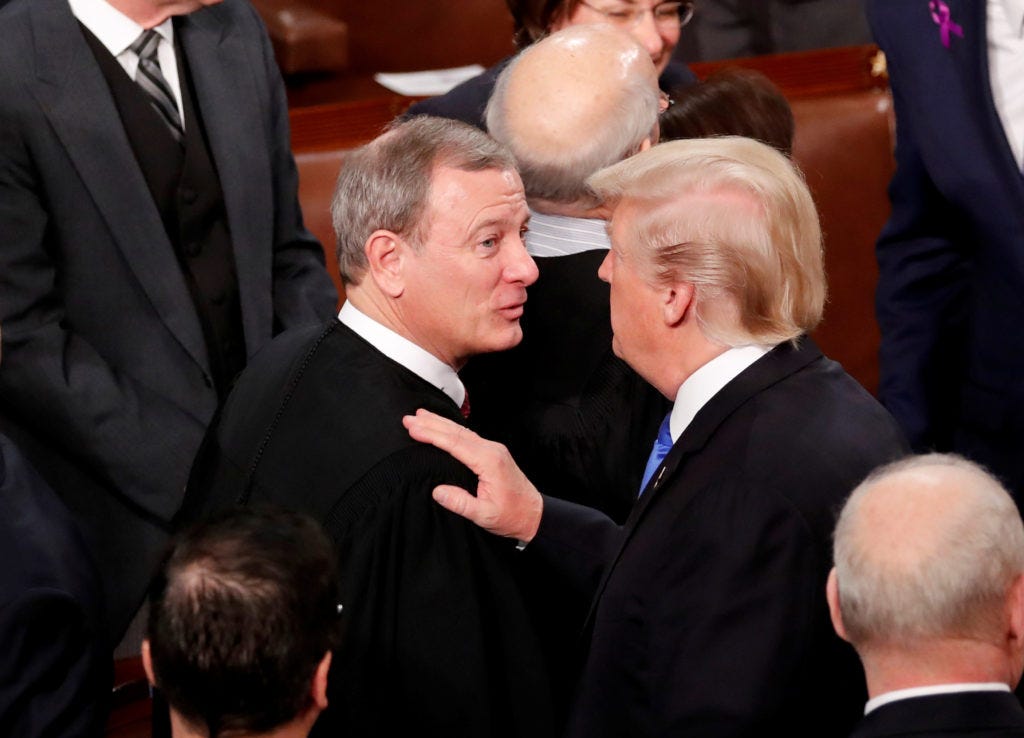
“Let’s give lots more power to Donald Trump.” That, in plain English, is what the conservative majority on the Supreme Court of the United States is about to do, in the case of Trump v. Slaughter. Today, the Court hears arguments in the case (which I’ll be covering). The question presented here is simple: Does the president—any president—have the power to fire anyone working in the executive branch? Or must presidents abide by laws passed by Congress that protect certain officials from being removed at will, at the mere whim of presidents, in order to insulate some executive functions from partisan pressures, and deepen the continuity of expertise in governing technical matters? There are dozens of such “independent agencies,” from the Federal Trade Commission and the Environmental Protection Agency, to the National Labor Relations Board and the Security and Exchange Commission. All were established by Congress over the years to deal with national issues through ensuring some degree of political independence and expertise. Many legal conservatives hate them. They champion the idea of a “unitary executive,” where all executive power is totally concentrated in one person, the president. The unitary-executive theory is an intellectual sleight of hand—it’s an invention of the late 20th century—masquerading as originalism. The actual historical record is unmistakable: the Founders did not create, and did not want, a president with total control over the executive branch. They were haunted by monarchy; they fought a revolution to escape it. Chief Justice John Roberts—who has done so much to supercharge Trump’s presidency under this theory—is about to lead the Court’s conservatives in undoing that part of our Revolution, and give Trump even more power.
The Fed gets Trumpier. The Federal Reserve is expected to cut interest rates this week. Sounds like a normal story. But, like so much else in our hard time, this is all about what Donald Trump wants. The Fed is engaged in a high-stakes gamble to steady an economy showing real stress beneath the surface, in large part because of Trump’s tariffs and the chaotic way he is imposing them. Inflation has cooled a bit, but consumer debt is mounting, growth is uneven, and working-class households are feeling the squeeze first. By cutting now, the Fed is signaling urgency: it sees a softening economy and wants to cushion the landing. But the move also lands in a charged political moment, with markets already rattled by Trump’s intention to install his toady economic adviser, Kevin Hassett, as the next Fed Chair. So rate cut meant to calm market jitters could instead highlight how vulnerable monetary policy is to political turbulence. Will the public continue to believe that the Fed is acting independently, or are we looking at the Age of Trumpism in monetary policy, too?
Farewell, Europe. Last Friday, the Trump administration released a new U.S. “National Security Strategy,” and the sound you heard was the transatlantic alliance cracking. Trumpism has now taken open aim at Europe itself, portraying the EU as a continent in civilizational decline and signaling that Washington will “cultivate resistance” to the choices European voters consistently make in rejecting (so far) right-wing extremist—even racist—political parties. Instead, Trump demands Trumpism from London to Berlin to Oslo and beyond. The Kremlin loved it. After having lost the Cold War because of its own stupid tyranny and the greater appeal of US and Western values, Russia stands poised on the brink of new opportunities in Europe, The United States, under Trump, will cheer Moscow on. It’s shocking and disgraceful. Now, in the coming days and weeks, Europe’s response will begin to crystallize. In the long run, the world will be a more dangerous place—and America will be less trusted, more isolated, less prosperous.
Knives Out 3. I didn’t think I’d like the first Knives Out movie. A hokey who-dunnit; Daniel Craig with a perfectly awful Southern accent; slapstick. Not my thing, I thought. But writer-director Rian Johnson clearly had a blast making it, and you could feel his delight right through every scene. The new Knives Out drops this week, and the word is that Johnson is once again serving up a fizzy, dizzying cocktail of social satire, eccentric suspects, and pure, twisty, Agatha-Christie joy. Daniel Craig returns as Benoit Blanc—a character who is somehow both ridiculously implausible and brilliant. It’s the rare franchise that’s both clever and fun, and don’t we all need some more of that?
And here’s a holiday treat. A dazzling preview for a new movie by Chinese director Bi Hang. I have no idea what it’s about—but it sure looks dreamy. Enjoy.
—Terry
The seditious SCOTUS six : John Roberts, Samuel Alito, Clarence Thomas, Brett Kavanaugh, Neil Gorsuch and Amy Viney Barrett. They are fully complicit in the destruction of our constitution and rule of law. They want authoritarianism.
Thanks for helping us manage the abundance of news developments, Terry. It's hard to trust news sources to be free of partisanship, but although I read/listen with a critical filter, with you, I don't feel guarded. So glad you're on Substack!